
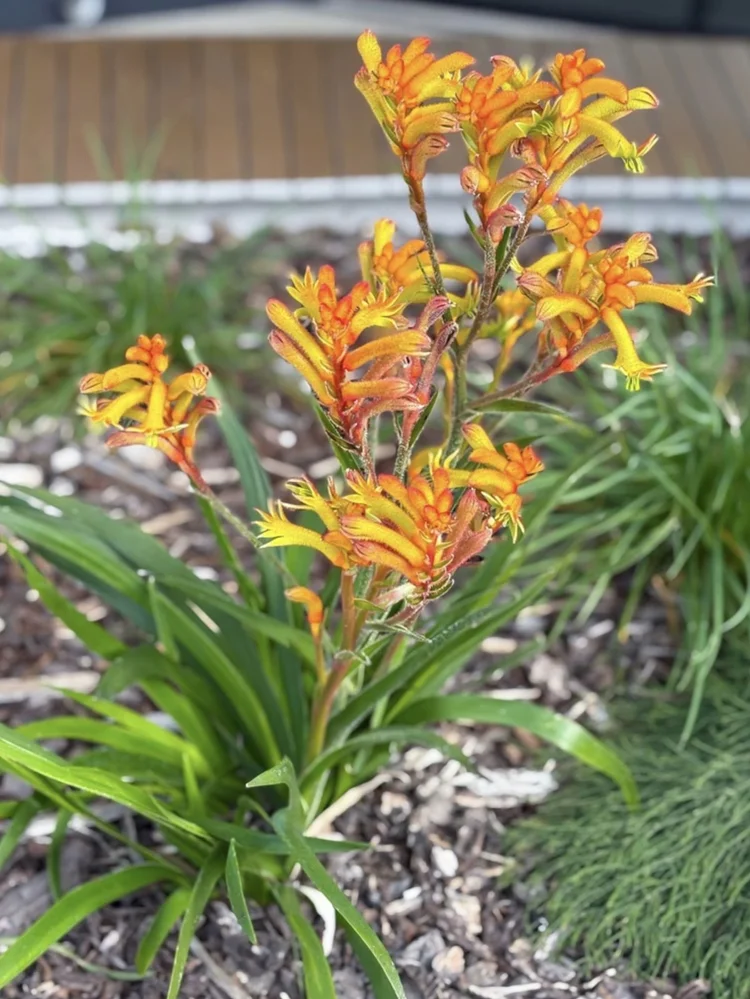
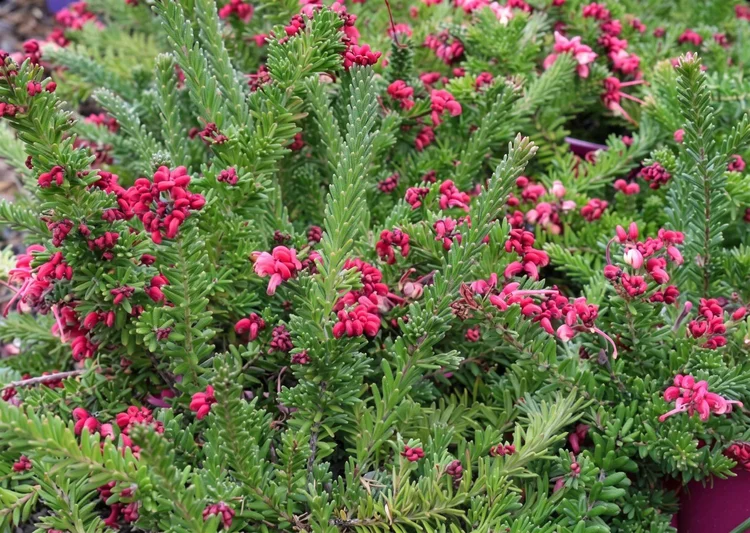
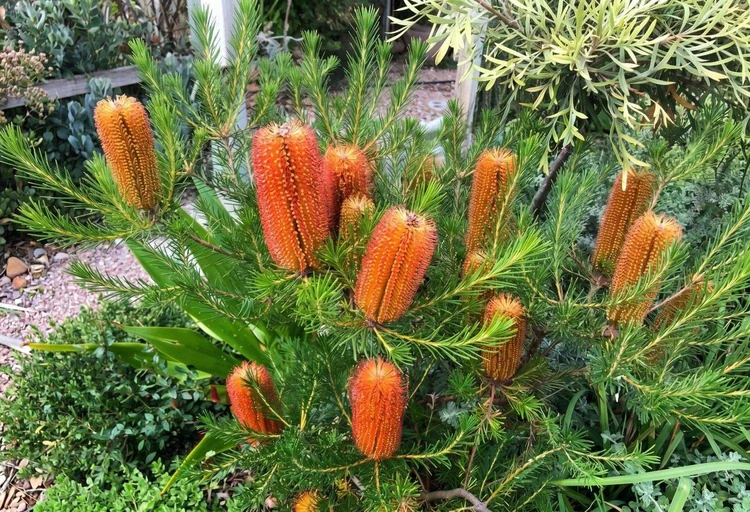
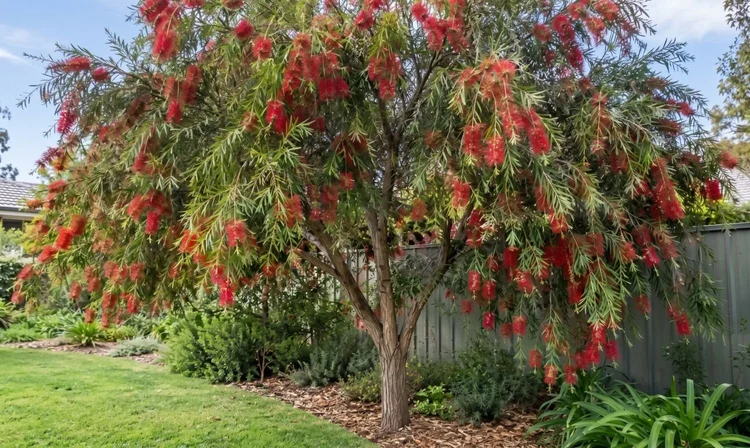
Australian Native Plants Canberra
Bottlebrush, grevillea, kangaroo paw, banksia, correa and lomandra that cope with frost, wind and dry spells once established, and bring birds and bees into the garden. Delivered across Canberra, Queanbeyan, Googong and Jerrabomberra in 2–3 business days. Free delivery on orders over $100.
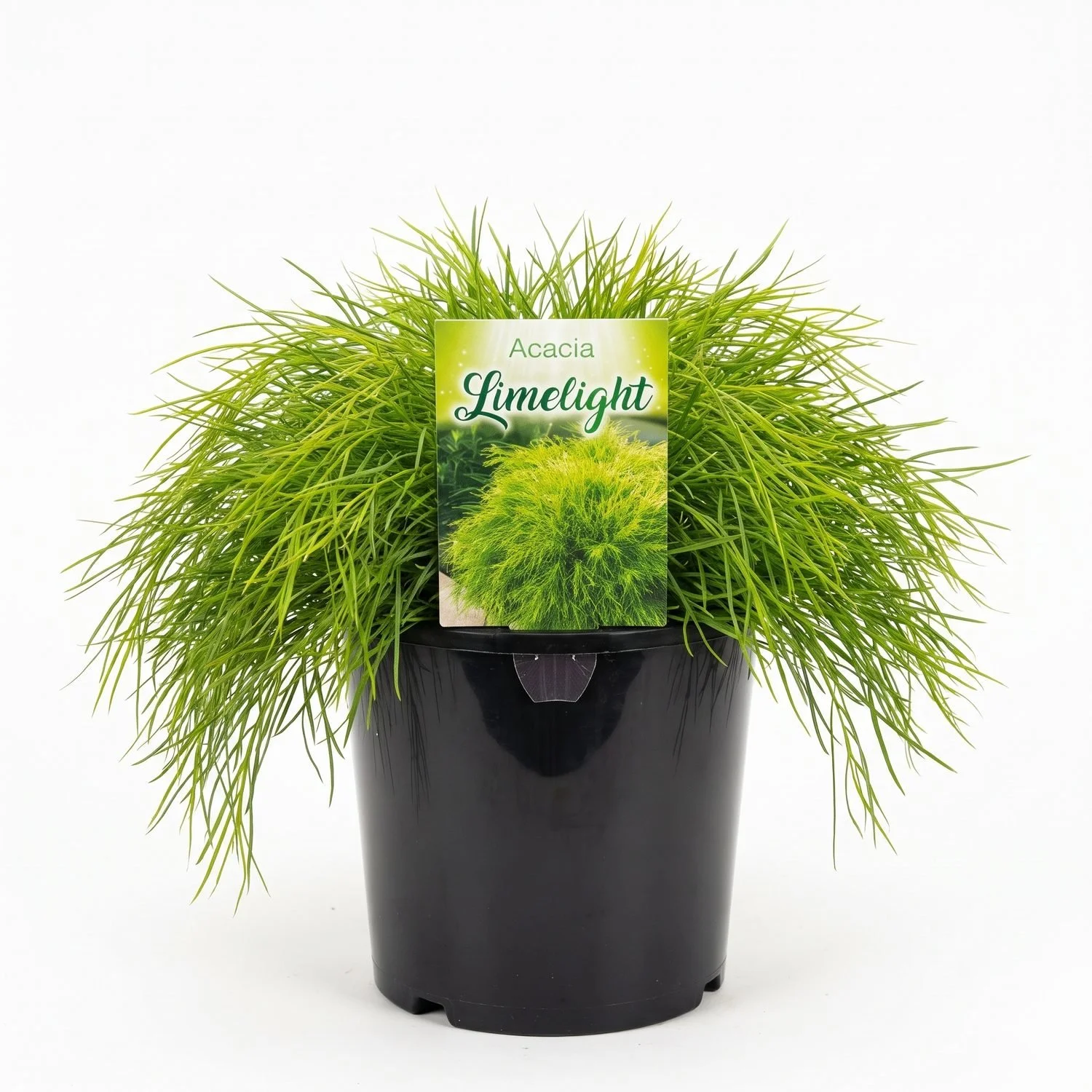
Limelight is a compact Australian native wattle grown for its soft, weeping lime green foliage that stays bright all year. It forms a dense, rounded mound that cascades beautifully over pot edges and garden borders, and it's soft to touch rather than prickly, so it's great near paths and play areas. Tough and water-wise once settled, it's an easy way to add texture and fresh colour to Canberra gardens.
- Mature size: 0.5-1m high x 1-1.2m wide
- Foliage: Fine, soft, weeping lime green leaves, evergreen
- Flowers: Small fluffy pale yellow balls in spring (a bonus to the foliage)
- Growth habit: Compact, dense, cascading mound
- Position: Full sun to light shade, well-drained soil
- Climate: Drought tolerant once established; handles light frost, give young plants a sheltered spot in Canberra's colder pockets
- Water needs: Low once established
- Soil: Well-drained soil. On heavy Canberra clay, dig in gypsum clay breaker before planting. In pots, use Native Osmocote Potting Mix.
- Feeding: Osmocote Native in spring, or Neutrog Bush Tucker as a liquid feed. Seasol at planting helps it settle in.
- Maintenance: Low. A light trim keeps it neat; no regular pruning needed
- Ideal for: Pots, courtyards, borders, feature planting and soft native groundcover
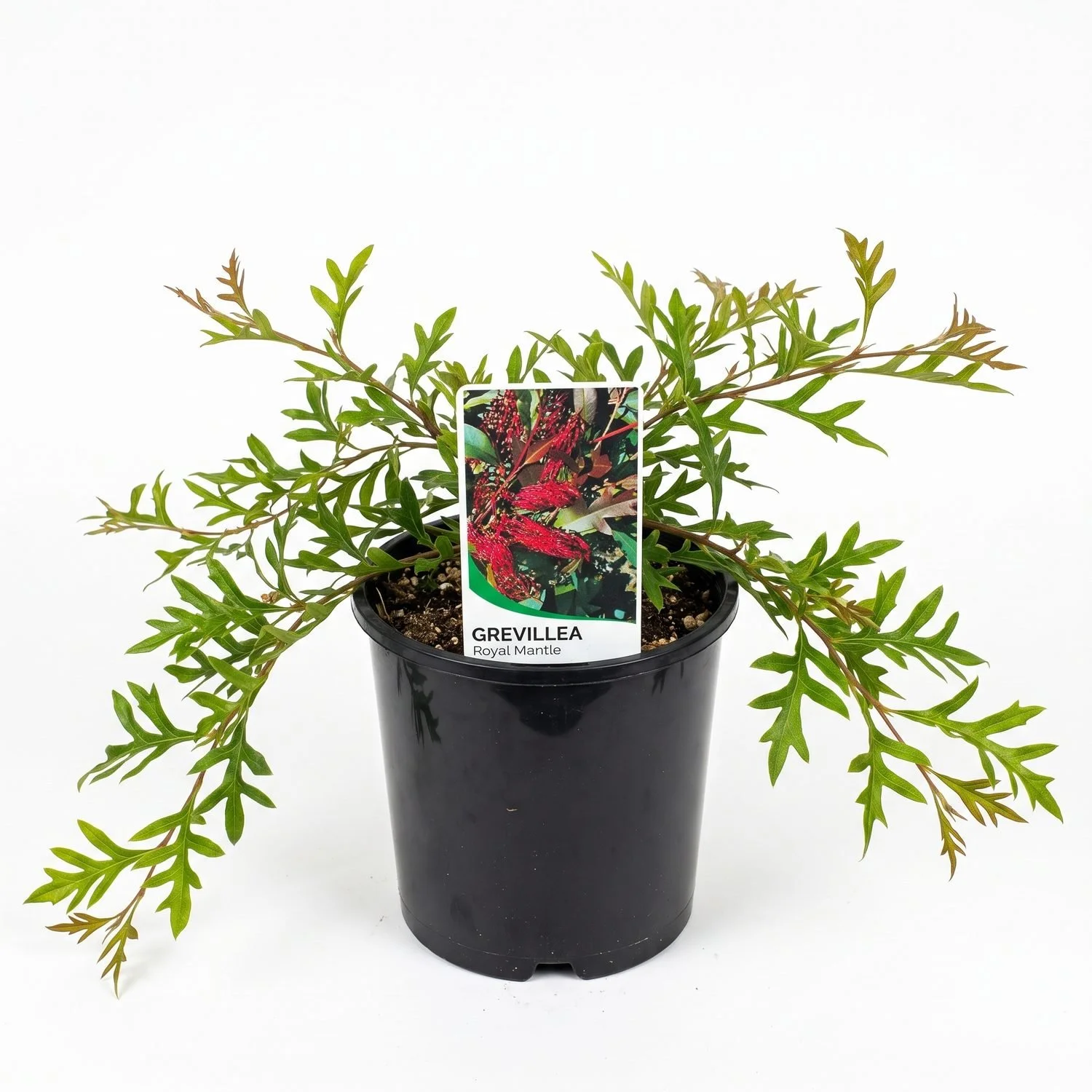
Royal Mantle is a vigorous, carpeting grevillea that quickly forms a dense, weed-suppressing mat of glossy green foliage with coppery-red new growth. Deep red toothbrush flowers appear for much of the year, peaking from late winter through spring, and the honeyeaters love them. It handles frost, drought and even snow, making it one of the best native groundcovers for banks, large beds and spilling over retaining walls in Canberra.
- Mature size: 20-30cm high x 3-5m wide
- Foliage: Glossy green lobed leaves with coppery-red new growth
- Flowers: Deep red toothbrush flowers, late winter to spring and sporadically through the year
- Growth habit: Dense, fast-spreading groundcover
- Position: Full sun to light shade, well-drained soil
- Climate: Frost hardy and drought tolerant once established
- Water needs: Low once established
- Soil: Free-draining, low-phosphorus soil. On heavy Canberra clay, dig in gypsum clay breaker and plant on a slight mound. In pots, use Native Osmocote Potting Mix.
- Feeding: Sensitive to phosphorus, so use a native fertiliser only: Osmocote Native in spring, or Neutrog Bush Tucker as a liquid feed. Avoid general fertilisers and manures.
- Maintenance: Low. Tip prune to keep it dense and trim edges as needed
- Ideal for: Groundcover on banks and large beds, cascading over walls, erosion control and bird-attracting gardens
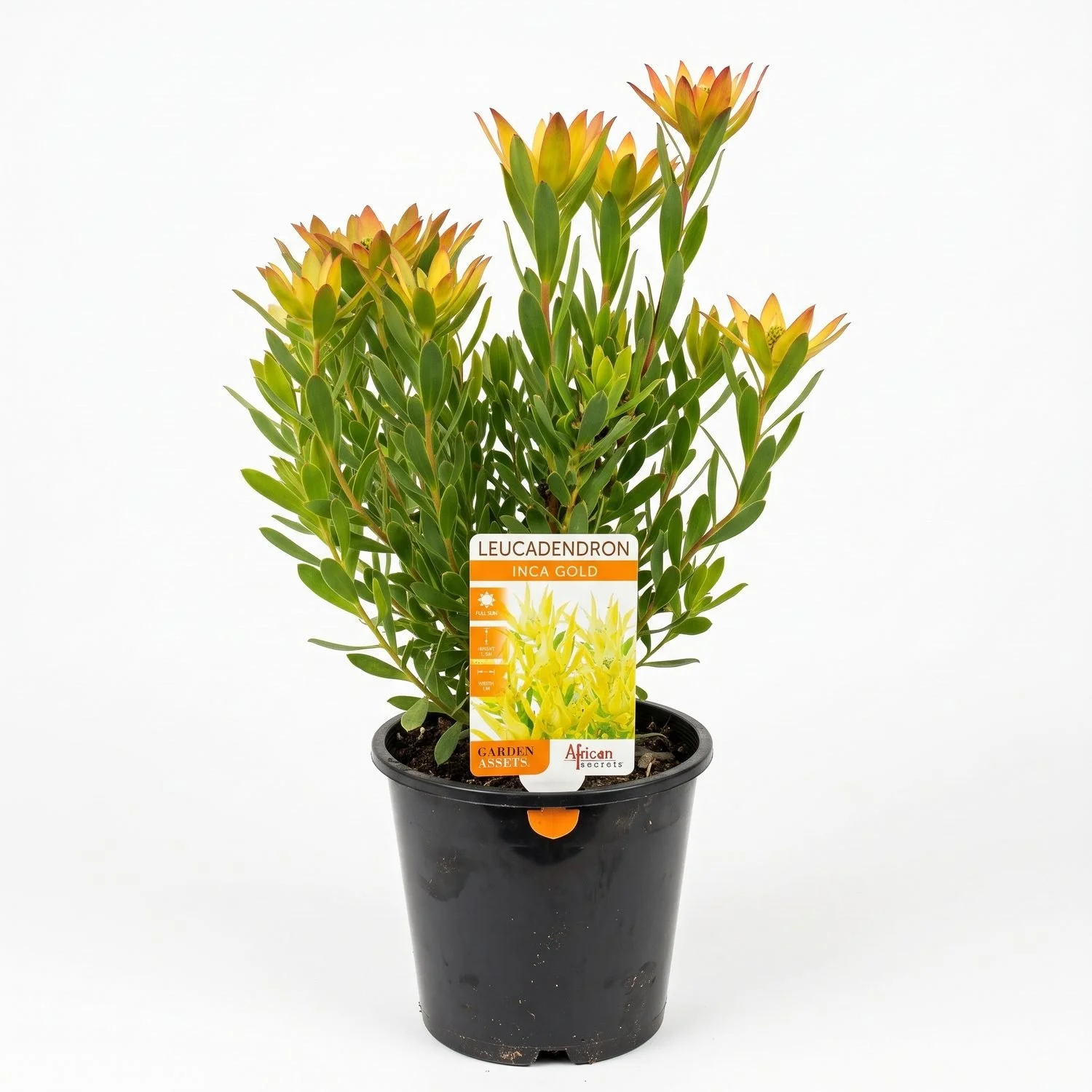
Inca Gold lights up the garden through the dullest months, with tulip-shaped bracts that open yellow with red-edged tips in autumn and deepen to a glowing gold over winter and spring. The red-tinted stems and dense green foliage look good all year, and the stems last for weeks in a vase. It's a tough, water-wise shrub for a sunny, well-drained spot; in Canberra give young plants a little protection from hard frosts for their first couple of winters.
- Mature size: 1.5m high x 1.5m wide
- Foliage: Dense mid-green leaves on red-tinted stems
- Flowers: Golden-yellow bracts with red tips, autumn through spring
- Growth habit: Rounded, bushy shrub
- Position: Full sun, well-drained soil (avoid phosphorus-rich fertilisers)
- Climate: Drought tolerant once established; tolerates light frost, protect young plants from hard frosts
- Water needs: Low once established
- Soil: Free-draining, low-phosphorus soil. On heavy Canberra clay, dig in gypsum clay breaker and plant on a slight mound. In pots, use Native Osmocote Potting Mix.
- Feeding: Sensitive to phosphorus, so use a native fertiliser only: Osmocote Native in spring, or Neutrog Bush Tucker as a liquid feed. Avoid general fertilisers and manures.
- Maintenance: Low. Prune after flowering to keep it compact and encourage more stems
- Ideal for: Feature planting, informal screens, large pots, cut flowers and water-wise gardens
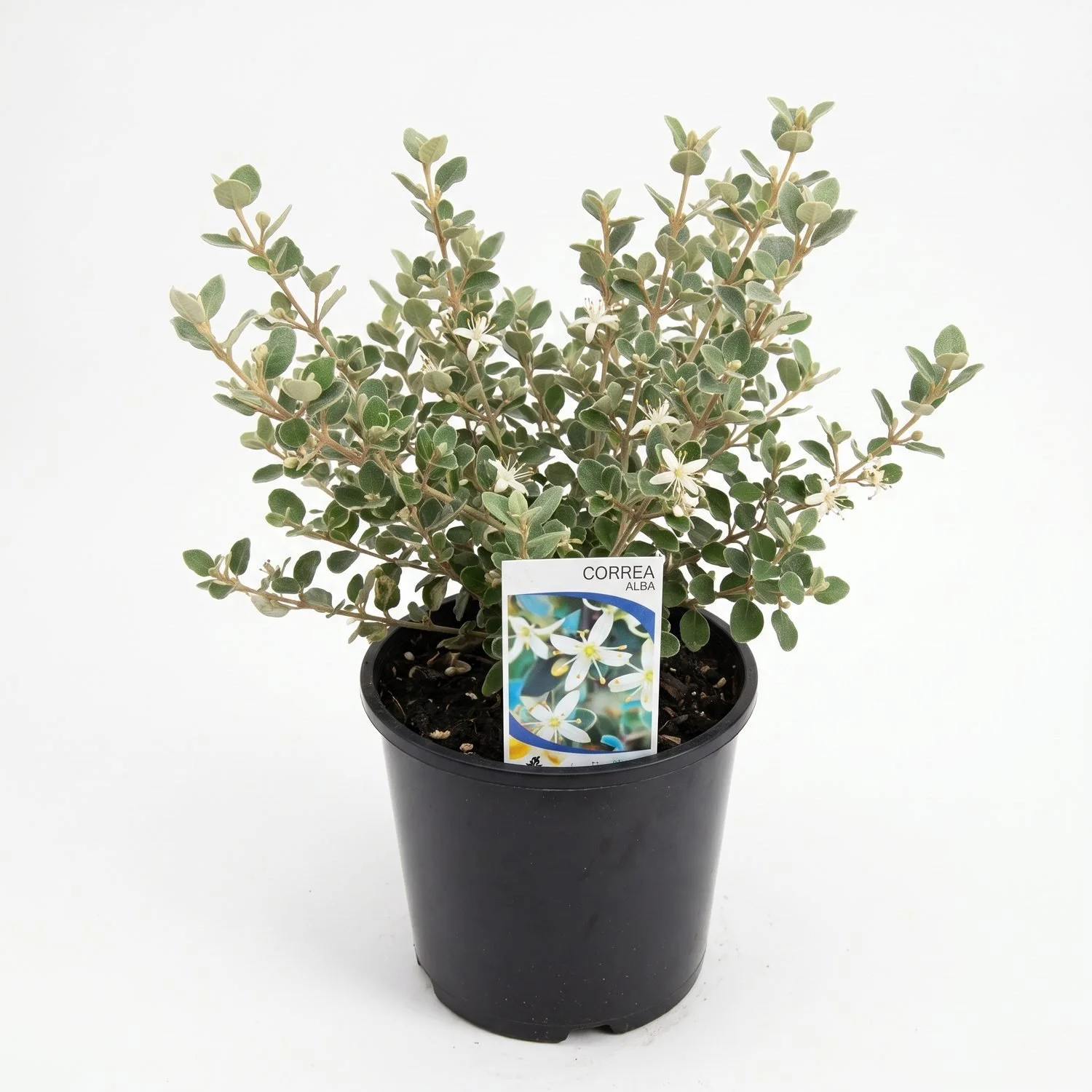
White Correa is one of the hardiest and most useful Australian native shrubs around. It forms a neat, rounded mound of soft blue-green foliage dotted with delicate starry white flowers from autumn right through to spring, when little else is in bloom. It copes with frost, drought, poor soil and coastal winds, and takes clipping beautifully, so it's a great choice for a low native hedge or border in Canberra gardens.
- Mature size: 1-1.5m high x 1-1.5m wide
- Foliage: Soft, rounded blue-green leaves with a felty underside
- Flowers: Small starry white flowers, autumn to spring, with spot flowering year round
- Growth habit: Dense, rounded mound
- Position: Full sun to part shade, well-drained soil
- Climate: Frost hardy and drought tolerant once established
- Water needs: Low once established
- Soil: Well-drained soil. On heavy Canberra clay, dig in gypsum clay breaker before planting. In pots, use Native Osmocote Potting Mix.
- Feeding: Osmocote Native in spring, or Neutrog Bush Tucker as a liquid feed. Seasol at planting helps it settle in.
- Maintenance: Low. Trim lightly after flowering to keep it dense; takes clipping well
- Ideal for: Low native hedges and borders, pots, coastal gardens and bird-attracting plantings
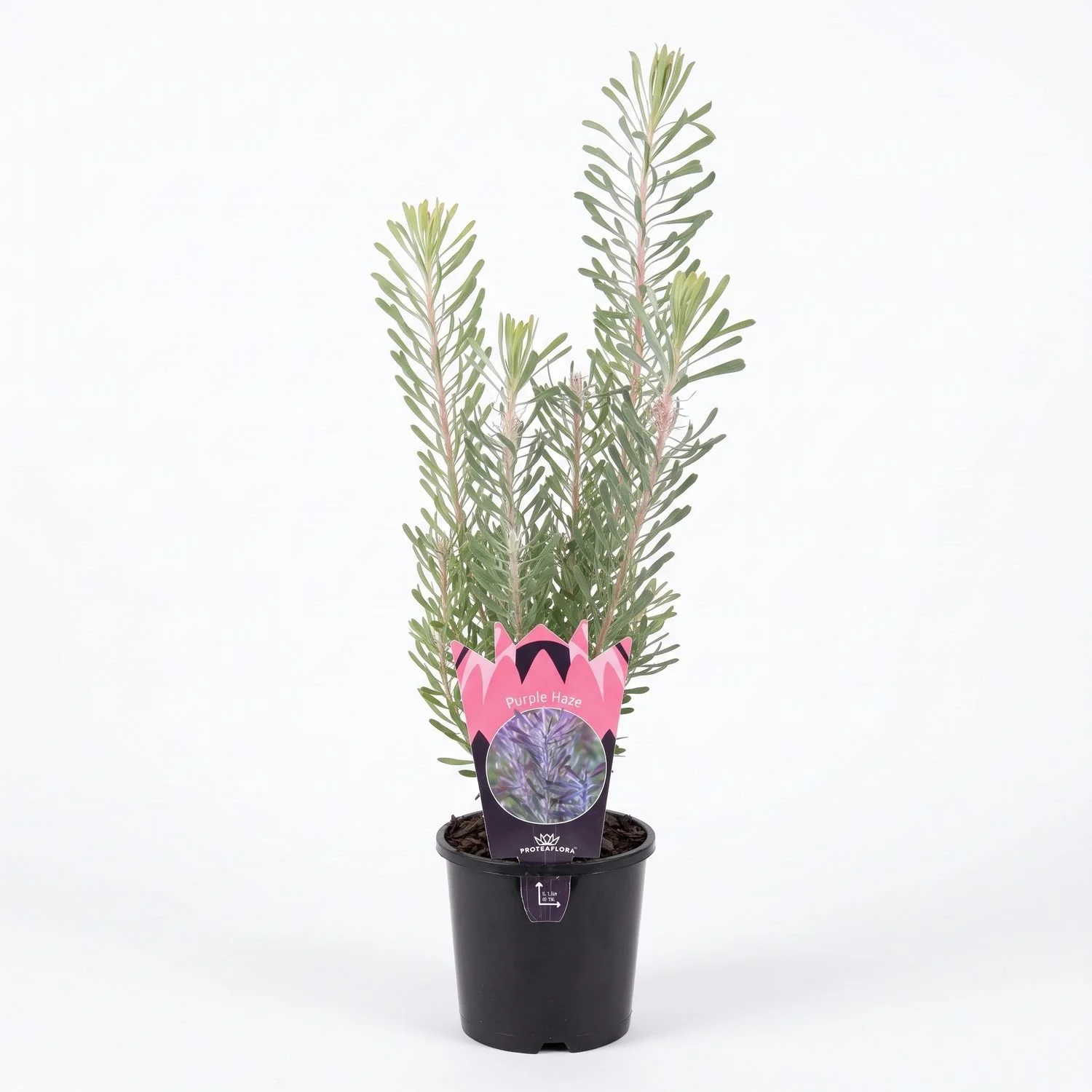
Purple Haze is a compact, upright leucadendron grown for its striking foliage. Through the cooler months the leaves flush deep purple with silvery-grey highlights, then silver cones follow in late spring and summer. It's a tough, water-wise shrub that thrives in Canberra's hot, dry summers and handles moderate frosts once established. A standout feature plant for modern and coastal-style gardens, and the stems are lovely for picking.
- Mature size: 1.5m high x 1m wide
- Foliage: Grey-green leaves turning deep purple with silver highlights in winter
- Flowers: Silver cones in late spring and summer
- Growth habit: Compact, upright shrub
- Position: Full sun, well-drained soil (avoid phosphorus-rich fertilisers)
- Climate: Moderate frost tolerance once established; drought tolerant
- Water needs: Low once established
- Soil: Free-draining, low-phosphorus soil. On heavy Canberra clay, dig in gypsum clay breaker and plant on a slight mound. In pots, use Native Osmocote Potting Mix.
- Feeding: Sensitive to phosphorus, so use a native fertiliser only: Osmocote Native in spring, or Neutrog Bush Tucker as a liquid feed. Avoid general fertilisers and manures.
- Maintenance: Low. Prune lightly after flowering to keep it bushy
- Ideal for: Feature planting, modern and coastal gardens, large pots and cut stems
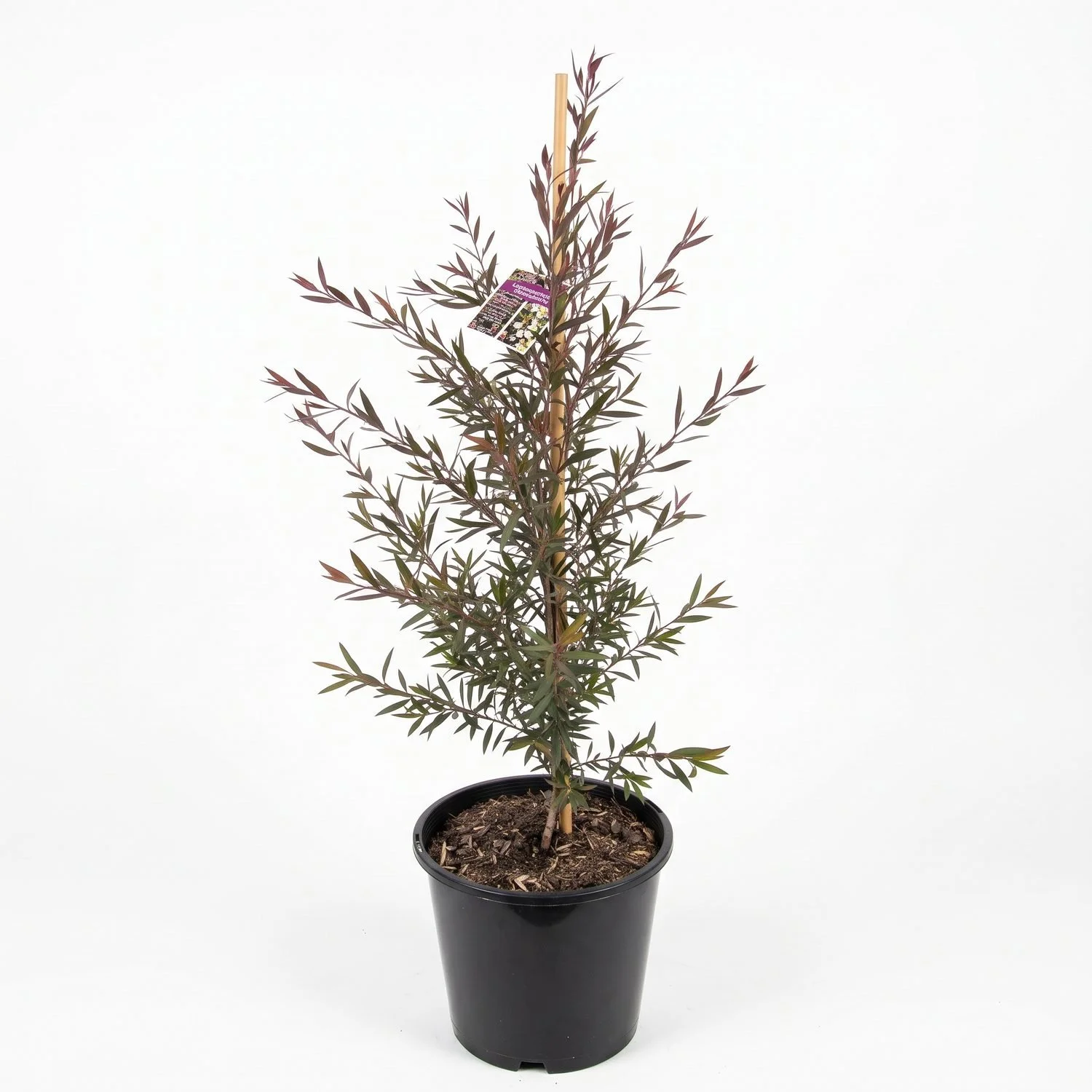
A striking native tea tree grown for its fine, deep burgundy foliage, which adds rich colour and contrast against green plants all year round. In spring it's covered in small white flowers that bees love. Fast growing and tough once established, it makes a great feature shrub, informal screen or colourful hedge in sunny Canberra gardens.
- Mature size: Approx. 2-3m H x 1.5m W (easily kept smaller with pruning)
- Foliage: Fine, deep burgundy, evergreen
- Flowers: Small white flowers in spring
- Growth habit: Upright, bushy shrub; fast growing
- Position: Full sun to part shade; well-drained soil
- Climate: Drought tolerant once established; tolerates light frost
- Water needs: Regular watering while establishing, then low
- Soil: Well-drained soil. On heavy Canberra clay, dig in gypsum clay breaker before planting. In pots, use Native Osmocote Potting Mix.
- Feeding: Osmocote Native in spring, or Neutrog Bush Tucker as a liquid feed. Seasol at planting helps it settle in.
- Maintenance: Low. Trim after flowering to keep it dense and well shaped
- Ideal for: Feature planting, informal screens, colourful hedges and native gardens
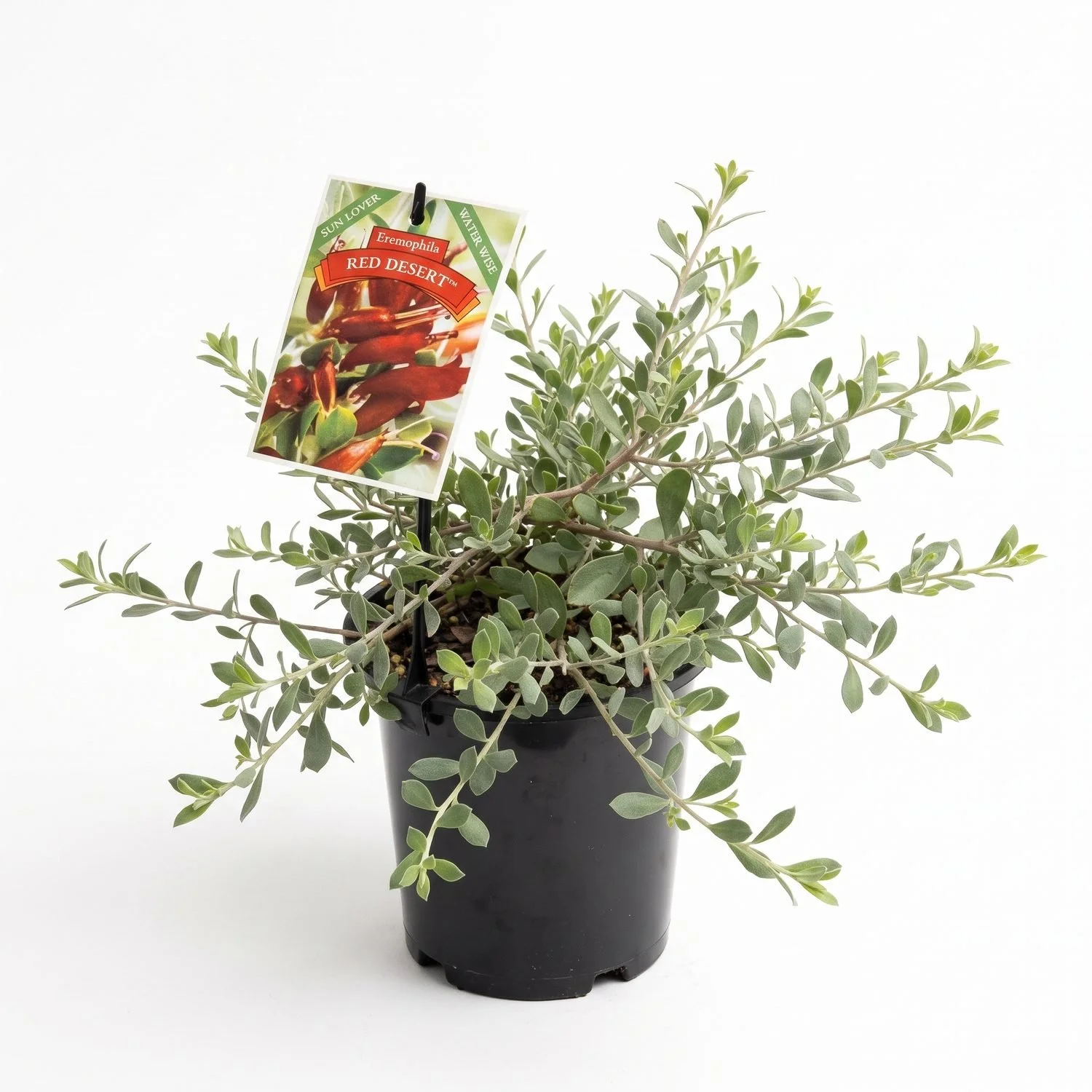
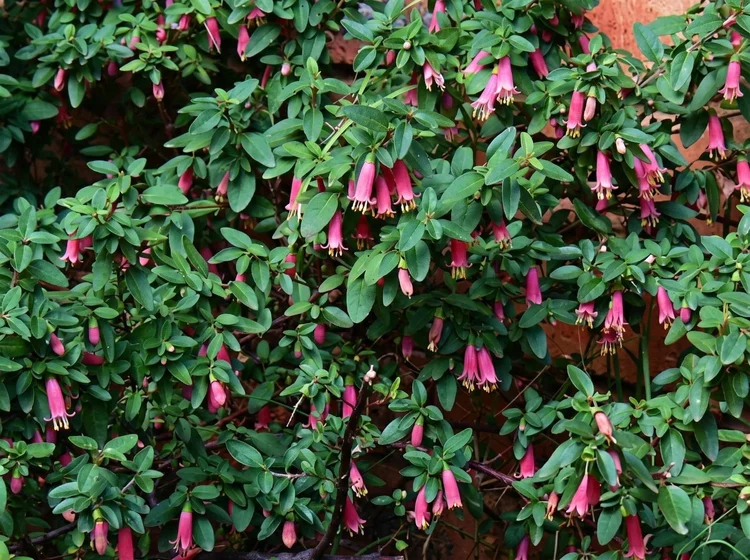
A tough, low-growing emu bush with soft silver-grey foliage and masses of tubular red flowers that honeyeaters can't resist. It spreads into a neat, dense mound that's perfect for covering dry, sunny ground or edging a native garden, and it can be lightly trimmed into a low flowering hedge. Once established it shrugs off heat and dry spells and copes with light Canberra frosts.
- Mature size: Approx. 30-50cm H x 1-1.5m W
- Foliage: Soft, silvery-grey, evergreen
- Flowers: Red tubular flowers, mainly autumn through spring with spot flowering at other times
- Growth habit: Low, dense, spreading mound
- Position: Full sun; needs well-drained soil
- Climate: Very drought tolerant; tolerates light to moderate frost once established
- Water needs: Low once established; avoid overwatering
- Soil: Well-drained soil. On heavy Canberra clay, dig in gypsum clay breaker before planting. In pots, use Native Osmocote Potting Mix.
- Feeding: Osmocote Native in spring, or Neutrog Bush Tucker as a liquid feed. Seasol at planting helps it settle in.
- Maintenance: Low. A light trim after flowering keeps it compact
- Ideal for: Groundcover, low borders, rockeries, native and bird-attracting gardens
Growing natives in Canberra
Bird-attracting shrubs
Bottlebrush, grevillea and banksia flower for months and bring honeyeaters and other nectar-feeding birds into the garden.
Low and compact natives
Correa 'Dusky Bells', Crowea, kangaroo paws and Westringia suit smaller gardens, borders and pots.
Natives for covering ground
Myoporum, Eremophila 'Kalbarri Carpet', Grevillea 'Bronze Rambler' and creeping saltbush spread to cover bare soil and help keep weeds down.
Native plant questions
Are natives frost-hardy in Canberra?
Everything in our native range is chosen to cope with Canberra's frosts once established. Give very young plants some shelter in their first winter in exposed spots.
What soil do natives need?
Good drainage matters most. On heavy Canberra clay, dig in gypsum clay breaker or plant on a slight mound.
Which fertiliser should I use?
Use a native fertiliser such as Osmocote Native. Many natives dislike the high phosphorus in general-purpose feeds.
How do I keep them bushy?
Prune lightly after flowering, especially bottlebrush and grevillea, and water regularly for the first few months. After that most natives need very little.
Not sure which native suits your garden? Call Pat on 0401 260 263 and we'll help you choose.

Sunkissed is a tough, mass-flowering native groundcover from the Bush Magik range, a cross between Grevillea juniperina and Grevillea rhyolitica. It forms a dense, spreading mat of fine, bright green foliage that's covered in clusters of apricot-orange spider flowers, mainly through autumn, and the honeyeaters love them. It's water-wise once established and handles light to moderate frosts, making it a great choice for sunny banks, rockeries and borders in Canberra gardens.